Truck Ammo Off Road Shop
If you're shopping lift kits and truck accessories in Reading, start by deciding whether you need a leveling upgrade or a complete suspension lift. A leveling upgrade corrects factory rake and keeps daily manners intact, while a suspension lift adds clearance, wheel travel, and larger tire fitment. You'll want precise year, trim, drivetrain, and suspension details to verify Rough Country fitment. Budget for tires, alignment, and accessories like steps, lights, or liners—you'll see how the right setup comes together.
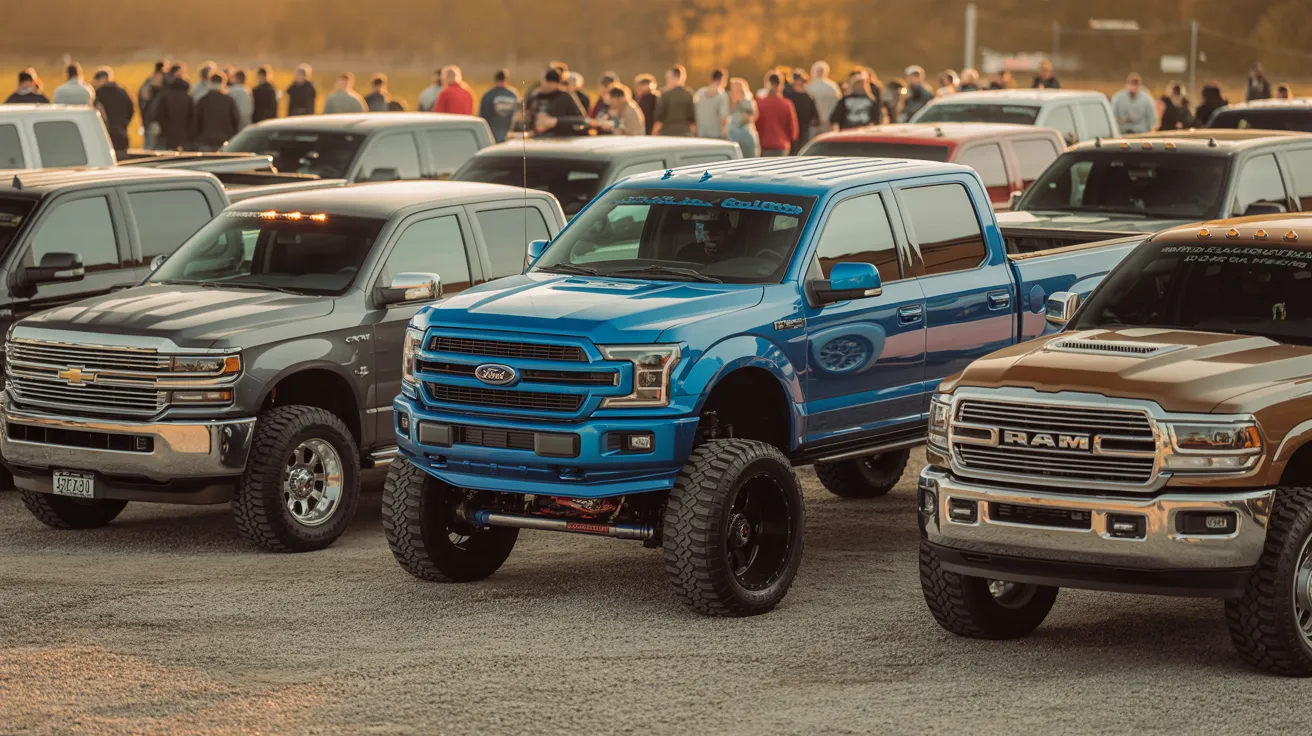
Important Highlights
- Pick a leveling kit to correct factory rake while keeping near-stock handling and accommodating bigger tires for everyday commuting.
- Choose a suspension lift kit for added clearance, suspension articulation, and off-road performance, understanding that steering response may differ.
- Check exact fitment with your truck's year, model, make, drivetrain, trim, cab, bed, and suspension system before buying Rough Country parts.
- Pair lift height and shock setup to your usage style, whether commuting, doing trail work, towing, or serious off-road travel.
- Budget for more than the kit cost, covering alignment, labor, wheels, tires, shocks, and supporting accessories like steps, lights, and liners.
Suspension Lifts versus Leveling Kits
Although both modifications change your truck's profile, leveling kits and suspension lift kits handle different problems and deliver different results. A leveling solution usually raises the front to match the rear, correcting factory rake with little alteration to geometry, ride height, and daily drivability. You choose one when you desire a cleaner appearance and space for slightly larger tires.
A suspension lift raises the entire truck and changes important parts to create greater clearance and wheel travel. You'll see larger improvements in ride height, off-road capability, and tire fitment, however you should prepare for handling tradeoffs, steering changes, and a higher center of gravity. When you prefer subtle visual improvement, level it. If you require real clearance and articulation, go with a suspension lift and plan the supporting mods based on your use case.
What Rough Country lift kit is right for your truck?
To identify the right kit, start with your truck's year, make, model, drivetrain, and planned application, because Rough Country builds lift kits around exact structural design and performance goals. That baseline tells you which structural components and fasteners will actually mount correctly without fitment or geometry issues.
Then examine original ride height, cab layout and bed setup, axle setup, and if your truck runs 2WD, 4WD, or adaptive suspension. Rough Country compatibility guides simplify this check, although you have to validate trim compatibility against trim-level parts and factory package variations. A kit designed for a Silverado 1500 might not work with a Trail Boss, and a Ram featuring air suspension needs different adjustments versus a coil-spring truck. Once you confirm exact fitment, you avoid unexpected problems, compatibility issues, and return hassles.
Determine which Rough Country lift kit suits your driving habits.
Align the kit with your driving style, and you'll enjoy enhanced ride quality, durability, and clearance for larger tires without purchasing unnecessary capability. When your truck mainly commutes, pick a light leveling kit from Rough Country or a 2 to 3.5 inch suspension setup designed for commuting comfort and stable steering response.
If you split time between pavement and trails, step up to a suspension upgrade featuring high-quality shocks and corrected control arm angles. You'll enjoy enhanced off-road performance, enhanced articulation, and clearance for larger tires without overstressing stock components. For extensive off-road use, prioritize lifted shock struts, N3 or Vertex shock dampers, and kits that maintain driveline angles under compression. A quality Rough Country package needs to match cargo load, speed, and terrain, and how much ride firmness you'll actually tolerate.
Leading Rough Country Truck Accessories
Complete your lift setup using Rough Country add-ons that solve the actual issues you'll encounter after lifting and upgrading tires. Start with upgraded entry steps or rock related article sliders, which regain ease of cabin entry and offer side protection now that your truck sits higher and broader.
Then address vision and control. Rough Country LED light bars increase visibility range on dark terrain, job sites, and rural roads without difficult installation. Cabin protection and floor mats keep safe cabin components from mud, stones, and water you'll drag in after trail use. Fender extensions help contain mud spray and enhance the wider profile provided by larger rubber. For hauling and rescue use, reinforced hitches, pulling hooks, and winch-capable bumpers deliver utility without impacting compatibility. Choose products that align with your lifted truck's dimensions and usage demands.
What Budget Should You Plan for Your Build?
After you've chosen the lift kit and auxiliary components, create a budget exceeding the listed kit price. You'll require money for shocks, wheel rims, tire set, alignment, installation labor, and any drivetrain or steering upgrades your platform requires. Brand reputation is important here; premium systems generally provide better precision, better ride quality, and less installation difficulty.
Regarding realistic cost projections, expect basic spacer or leveling kits to start at lower prices, while full suspension systems with control arms, tuned dampers, and larger tires rise quickly. Install complexity, labor costs, and calibration work may contribute significantly. You should also price additional upgrades such as gear swaps, brake parts, and recovery tools if you're building for trail use. If cash flow matters, compare payment alternatives carefully and prioritize consistency over flashy add-ons.
Popular Questions About Lifts
Do Lift Kits Impact Factory Warranty?
Yes, suspension lifts may affect your factory warranty coverage, but they don't automatically void it. You encounter warranty implications should a dealer proves the lift modification resulted in or contributed to a failure. Powertrain, steering, suspension, and drivetrain claims often trigger dealer disputes. You must maintain documentation of installation, use quality components, and follow service intervals. That helps you dispute denied claims and protect warranty protection where the modification isn't responsible.
Will Larger Tires Need Re-Gearing?
Yes—if you jump several tire sizes, you'll usually require gearing changes. For example, when you move from 31s to 35s—your truck may feel underpowered, hunt for gears, plus create drivetrain stress under strain. Re-gearing bring back correct gear ratios, allowing you to get back acceleration, towing efficiency, and transmission operation. You may not require it for small tire upgrades, however if performance, economy, or shifting decline, it's usually the right call.
How Frequently Should You Inspect Lift Parts?
You should inspect lift kit components once you hit 500 miles, then each time you change oil or at 3,000 to 5,000 mile intervals, based on your usage. Regular maintenance checks enable you to spot bushing wear, shock leaks, bracket damage, and alignment issues early. Check Fastener torque post-aggressive terrain driving, cargo hauling, or hard impacts. When you operate in mud, salt, or rough terrain often, tighten inspection schedules and inspect steering and suspension parts more frequently.
Does a suspension kit alter towing or payload capacity?
Yes, a lift kit can change your towing and payload capacity. When you boost ground clearance for more ground clearance, you alter suspension setup, center of gravity, and component leverage. That can lower stability under load and heighten drivetrain pressure, especially with larger tires. You should follow your maker's specs unless an factory-engineered kit specifically documents revised capacities. Proper alignment, gear selection, and braking operation are significant too.
Are Alignment Services Required After Installing vehicle modifications?
Yes—if attachments alter height of ride, suspension structure, steering direction, or tire measurement, you must have an alignment check. You'll witness the reality without delay: slight changes can force your truck off-center, wear down tread, and compromise handling. A proper wheel alignment restores camber angle value, caster angle value, and toe to manufacturer spec. After certain modifications, you should also arrange brake calibration for autonomous driver system accuracy. You extend tire lifespan, steering exactness, and on-road safety by checking alignment immediately.
Conclusion
Picking the ideal suspension setup and accessories comes down to your truck usage, your desired look, and your spending limit. When you align a Rough Country kit with your driving style, you'll obtain power, ground room, and style that work together as efficiently as a calibrated engine. Combine intelligent upgrades, organize your budget responsibly, and you'll build a truck that's practical on the road, capable off it, and set for any future work.